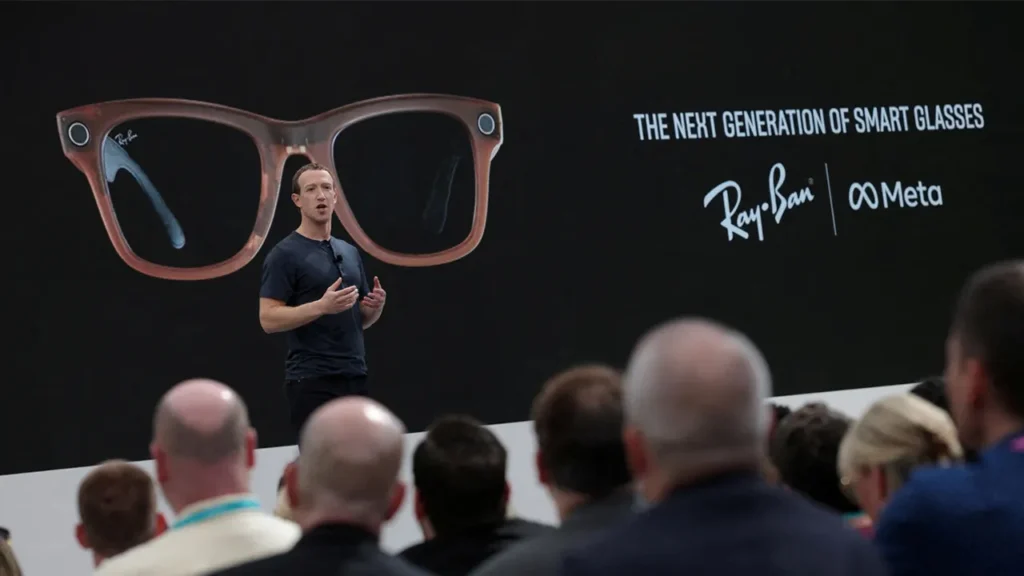
Smart glasses have gone from tech-industry curiosity to genuine mainstream product in the space of about eighteen months. Meta’s partnership with Ray-Ban — and, more recently, with Oakley — has done what Google Glass never managed a decade ago: made camera-equipped eyewear look and sell like ordinary sunglasses. Analysts estimate Meta has sold hundreds of thousands of pairs, and the category is only growing, with wearers ranging from tech enthusiasts to, increasingly, people simply going about everyday jobs.
That popularity is exactly why, this week, Staff One has issued new guidance to our workforce — particularly those working in care settings — on the protocol for wearing smart glasses while on duty. It’s a subject that sits right at the intersection of two things we take extremely seriously: keeping pace with useful technology, and protecting the privacy, dignity, and safety of the people our staff support.
Why Smart Glasses Are Suddenly Everywhere
The current wave of smart glasses combine a camera, microphone, speaker, and AI assistant into a frame designed to be indistinguishable from ordinary glasses. They can take photos and video, live-stream, translate conversations, and answer questions, all hands-free. For many everyday uses, that’s a genuinely useful piece of technology — which is exactly why adoption has taken off where earlier attempts failed.
But the same qualities that make them convenient are what make them a workplace concern, especially somewhere as sensitive as care. Unlike a phone, which people can see you holding up to record, smart glasses are worn on the face and can capture footage without anyone nearby realising it’s happening. Most models include a small LED light intended to signal when recording is active, but that safeguard has already proven fragile in practice. Reports have surfaced of wearers finding ways to disable the light, and researchers have shown that footage from these devices can, in principle, be linked with facial recognition tools to identify strangers who never agreed to appear on camera. Meta has since introduced a security update that shuts the camera down if the light is tampered with, and says it will pursue retailers who help customers bypass it — a sign of how seriously the issue is being taken, but also of how real the problem has been.
More recent reporting adds a further wrinkle: some manufacturers are reportedly developing “always-on” smart glasses models that may not illuminate any recording indicator at all when their more advanced sensing features are active, which would make it even harder for the people around a wearer to know when they’re being captured. Separately, a lawsuit has alleged that footage from smart glasses is at times reviewed by human contractors rather than processed only by AI, raising further questions about exactly who might end up seeing what a wearer records.
From Flop to Phenomenon: A Short History of Meta’s Smart Glasses
2021 — Ray-Ban Stories. Meta’s first attempt at smart eyewear launched in partnership with EssilorLuxottica, the world’s largest eyewear group and owner of Ray-Ban, Oakley, Oliver Peoples, and Sunglass Hut. The device could take photos and short videos, but with no AI assistant and limited functionality, it landed with a shrug — much like Google Glass before it.
2023 — Ray-Ban Meta. The second-generation model was the turning point, adding a genuine AI assistant, livestreaming, and sharper cameras, all still built into ordinary-looking Ray-Ban frames. It sold roughly two million units by the end of 2024.
2025 — Scaling fast. Meta and EssilorLuxottica extended their partnership “into the next decade,” launched the sportier Oakley Meta range, and Meta took a 3% stake in EssilorLuxottica with a €3 billion investment. Combined Ray-Ban and Oakley AI glasses sales passed seven million units for the year, with smart eyewear driving more than a third of EssilorLuxottica’s overall growth.
2026 — The field crowds in. Meta has said it wants to sell 10 million pairs a year by the end of 2026. A Prada-branded model is reportedly in development, and rivals are moving in fast: Google and Warby Parker have announced a competing AI glasses line for 2026, with Apple also reported to be working on its own version. What began as a niche experiment has become one of the fastest-growing categories in consumer tech — and, increasingly, something turning up on people’s faces at work.
Different Sectors, Different Stakes – The Healthcare Example
Aside from our provision across Commercial, Construction and Engineering Sectors, Care as a sector is considerably more sensitive. None of this is abstract for a care workforce. Our staff work in people’s homes, in residential settings, and alongside people who are often vulnerable, unwell, or unable to easily question or object to what’s happening around them. A support worker wearing a phone in their pocket is unremarkable. A support worker wearing a device that could be silently recording video and audio of a service user, in their own home, without clear consent, is an entirely different matter — one that touches on dignity, safeguarding, and data protection all at once.
The regulatory framework already reflects how seriously this is taken in care settings generally. The Care Quality Commission’s guidance on surveillance sets out clear expectations for any recording equipment used around people receiving care: it must be lawful, safeguarded, secure, and transparent, and — critically — people must be involved in decisions about recording that affects their privacy, with appropriate consent obtained in line with the Mental Capacity Act where relevant. The Information Commissioner’s Office applies UK GDPR principles to any recording that captures identifiable personal data, which very much includes footage or audio picked up incidentally by a device someone happens to be wearing. It’s worth noting that some sectors have gone further still: environments handling children’s safeguarding, and many hospitals, GP surgeries, and care homes, already restrict personal smart glasses outright given the sensitivity of what could be captured, even unintentionally.
That doesn’t mean there’s no legitimate place for this kind of technology in care. NHS trusts have been trialling purpose-built smart glasses in community nursing, using the devices to transcribe consented home visits directly into electronic patient records and to share live footage with colleagues for a second clinical opinion — but only where patients have explicitly agreed to both the technology’s use and the recording of their data, and where the software and data handling have been built specifically for that clinical purpose. The distinction is an important one: a clinical device deployed with informed consent, secure data handling, and a defined purpose is a different proposition entirely from a member of staff wearing their own consumer smart glasses on shift, with no equivalent safeguards in place.
What This Means in Practice
This is the distinction our new guidance is built around. Personal, consumer smart glasses with recording capability — the kind increasingly worn day-to-day as ordinary eyewear — are not appropriate to wear while working directly with the people we support, given the risk of incidental or unintended recording of service users, colleagues, and confidential information, and the difficulty of guaranteeing meaningful consent in that setting. Any use of recording-capable wearable technology for legitimate care purposes needs to go through the same rigour any other recording device would: a clear purpose, informed consent from the person being supported, secure handling of any data captured, and sign-off through the appropriate channels — not a personal device brought in informally.
We recognise this guidance lands at a moment when these devices are becoming genuinely widespread, and we don’t underestimate that some staff will simply be wearing them day-to-day as their regular glasses or sunglasses, with no intention of using any recording feature at all. That’s exactly why clear, proportionate guidance matters more than a blanket ban issued without explanation: our staff need to understand not just what the policy is, but why it exists, so they can make sensible decisions even in situations the policy doesn’t explicitly cover.
Our Responsibility as a Staffing Partner
As a staffing business working across the care sector, we sit in a position of trust with both our workforce and the organisations and individuals they support. Getting ahead of an emerging technology like this — rather than waiting for an incident to force the conversation — is part of how we take that responsibility seriously. It also reflects something we’ve said before on this blog: compliance and safeguarding shouldn’t be an afterthought bolted on once something has already gone wrong. They should be built into how we operate from the outset.
We’ll continue to monitor how this technology and the regulatory picture around it develop, and we’ll update our guidance as needed. In the meantime, if you’re a client or a member of our team with questions about what this means for you, our team is on hand to talk it through.
Our advice right now? Glasses off, glasses away. The technology is still at a proprietary stage where we are all getting used to the best-use and potential of smart wear. We believe that in time, smart glasses will become an incredibly useful tool like mobile phones, smart watches and tablets. Their future will benefit communication, oversight and data capture, but for now they present an active risk to security and privacy. Time and applications will certainly make wearable technology capable of capturing sound and images for professional purposes. The ability to discern when technology is actively monitoring or recording makes Smart Glasses a risk. We are advising our clients to set out guidance sooner rather than later to their workforce.
Get in Touch
Care settings deserve a staffing partner who thinks ahead of the risks, not just around them. If you’re looking for a compliant, responsive, and safe recruitment partner, get in touch with Staff One to find out how we can support you.